If you’re about to get started on your annual spring cleaning and home improvement projects, add a home safety checkup to the list. Home fire-related incidents occur more often than you might think: the Tucson Fire Department responded to 8,835 fire/rescue calls in 2016. To do your part to help keep your family out of harm’s way, consider the following important information about common home safety devices:
Smoke Alarms
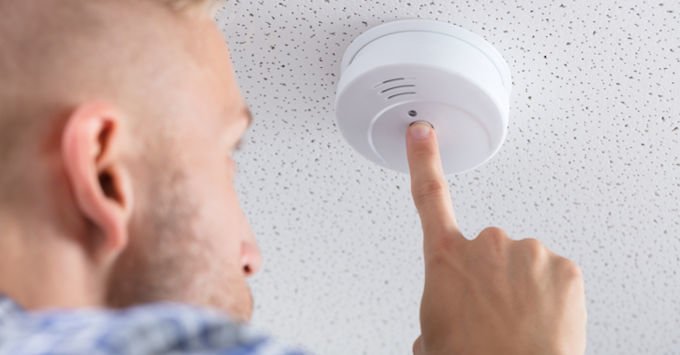
Smoke alarms are your first defense against fires, so make sure there’s an alarm on every level of your house, including the basement. Alarms should be in every bedroom or near every sleeping area.
There are different types of smoke alarms: some are battery-powered, and others are hardwired to your house’s electrical system. Hardwired devices usually come with a battery backup for added protection. There are even interconnected smoke alarms where if one goes off, all of the others sound their alarms, too. See this resource from Nest to learn more.
Like many devices around your home, smoke alarms require regular maintenance and inspection:
- Test your smoke alarms monthly
- Replace with fresh batteries once a year
- Replace the entire alarm every ten years
It is also wise to be aware of any product recalls. There are resources online, like this notice from the US Consumer Product Safety Commission about a recent Kidde recall, that can let you know if there is a recall on any of your smoke alarms.
Fire Extinguishers
Home fire extinguishers are a necessity for prevention, but be aware that there are different types that are used for certain kinds of fires. These are usually recommended for the average home:
- Class A – ordinary fires, including burning wood, cloth, paper, and plastic
- Class C – electrical fires, where a short circuit or overloaded electrical outlet set fire to nearby combustible items
- Class K – kitchen fires, where grease or hot oils catch fire while cooking
Using a fire extinguisher is a relatively simple process, as most extinguishers operate the same way:
- Pull the pin that breaks the tamper seal.
- Aim the extinguisher nozzle at the base of the fire.
- Squeeze the handle to spray the extinguishing agent.
- Wave the nozzle at the fire in a sweeping motion from side to side, covering the area of the fire.
If you are in doubt about your ability to put out a fire, evacuate immediately. Learn more from OHSA.
Do your homework on your particular brand of fire extinguisher and check for any product recalls, like this one from Kidde.
Carbon Monoxide (CO) Alarms
A carbon monoxide alarm is essential in your home. CO is often referred to as a “silent killer” because it’s an odorless gas that can be emitted from fuel-burning devices, such as your stove, furnace and water heater. A CO alarm can detect high levels of the gas–and if its alarm sounds, leave your home and call professionals for next steps.
CO alarms should be on every level of your house, especially near sleeping areas and bedrooms. If you have an attached garage, place an alarm near the door. Read the manufacturer’s recommendations for placement, but alarms should be at least five feet above the ground and away from fuel-burning appliances.
Routine maintenance on a CO alarm is similar to that of smoke detectors: test them monthly and replace the batteries once a year. The entire unit can be replaced every five to seven years.
Keeping your family safe at home is a top priority. For more helpful advice—and to ensure your home is protected from losses—talk to your insurance agent.


